Water
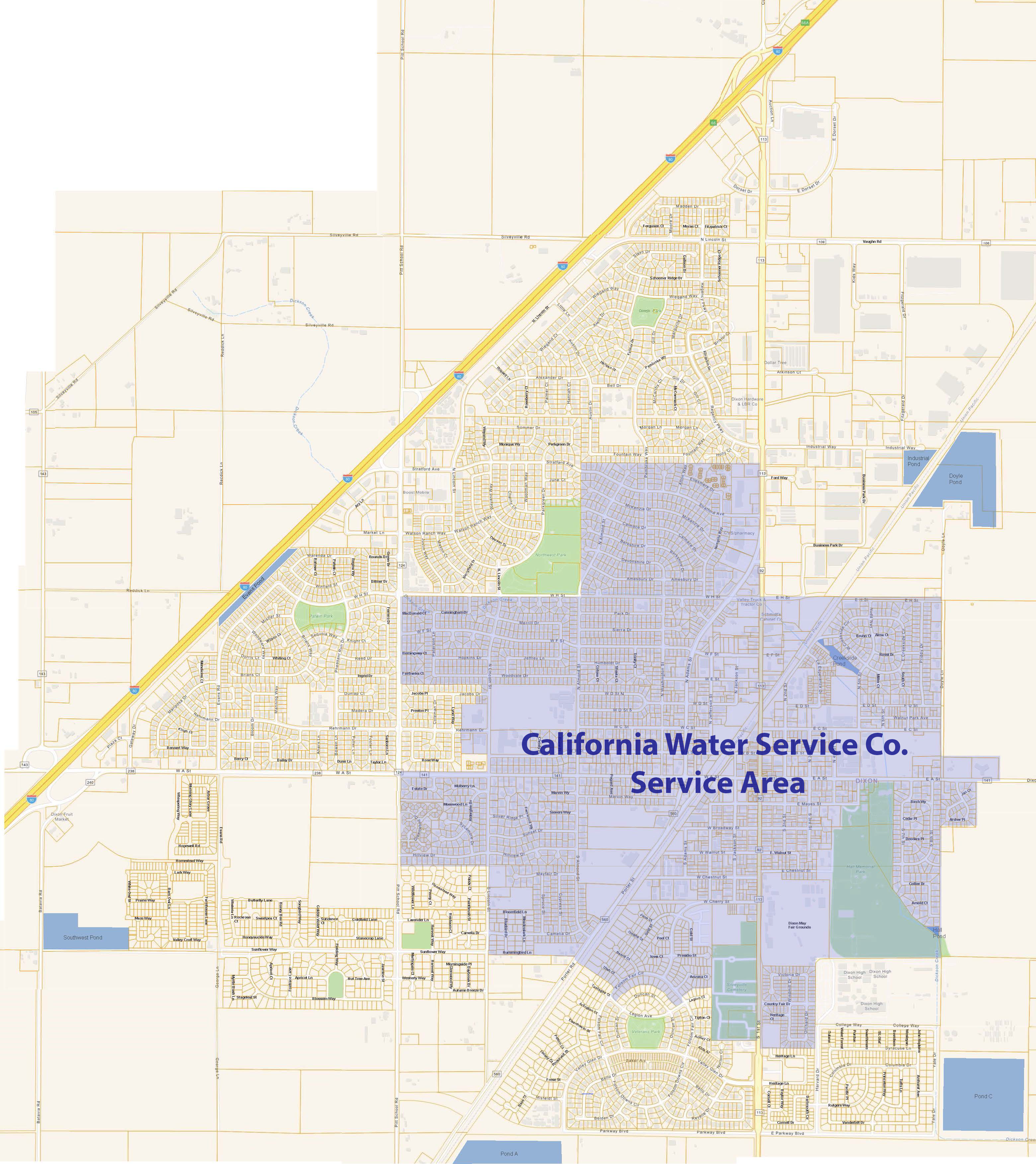
In the City of Dixon, there are two water providers, California Water Service and the City of Dixon. To determine who provides water to a property within the City of Dixon, please reference the water service area map. The City of Dixon owns and operates the municipal water system and became an Urban Water Purveyor servicing over 10,000 residences in 2021. The Water Operations Division strives to provide clean, safe reliable water to all its customers.
To pay your water bill, or for billing information, please click here.
To view the City's Water Quality/Consumer Confidence Report, please click here.
In March 2026 the City issued a state required notice. Please click here to view the full notice.
In accordance with California’s new drinking water regulations for hexavalent chromium (Cr6), The City of Dixon is sharing information about recent water quality results through State required noticing. This is not an emergency, your water is still safe for drinking, cooking and all other needs. Nothing has changed with the City of Dixon’s water, what changed is the State regulation. California has adopted the Nations first hexavalent chromium standard, with a maximum allowable level of 10 parts per billion (ppb). The rest of the Nation remains at a maximum allowable level of 100 ppb total chromium, which includes Cr6. The City of Dixons water averages 16-27 ppb hexavalent chromium. Treatment of our drinking water wells is necessary to meet the new standard, with a State set compliance deadline of October 1st, 2027.
Chromium is found naturally in rocks, plants, humans and animals. The most common forms of chromium that occur in natural waters are trivalent chromium (chromium 3) and hexavalent chromium (chromium 6). Hexavalent chromium, in high doses, can be identified as a carcinogenic. However, Dixon's water has always had a small trace amount of chromium 6 that is naturally occurring and not caused by industrial contaminants.
The City of Dixon's water supply currently averages between 16 and 27 parts per billion – far BELOW the levels set by the State and current Federal limits. The following information on chromium levels can be helpful to keep in mind:
- 100 parts per billion (ppb) is the federal maximum contaminant level (MCL) set by the EPA for total chromium. Total chromium includes both trivalent chromium (chromium 3) and hexavalent chromium (chromium 6).
- 50 ppb is the total chromium MCL for the state of California set by the State Water Resources Control Board, Division of Drinking Water (DDW), and is still in effect. Dixon is in compliance with this standard.
The City has developed a Hexavalent Chromium Compliance Plan that outlines the source of the exceedance, proposed treatment solutions, an implementation timeline, and any mitigation measures. This plan, along with the updated feasibility study, will guide us toward restoring compliance and ensuring safe, reliable drinking water for our community.
As we move through this process, we are also fulfilling regulatory requirements under the Safe Drinking Water Act. Because hexavalent chromium levels in our water system have exceeded the state’s maximum contaminant level of 10 parts per billion, we are required to issue a Tier 2 Public Notification within 30 days of the exceedance. This notice will inform the public of the situation, outline any potential long-term health risks, describe actions taken to date, and provide contact information for further questions. The notice must be distributed to all affected customers and translated into other languages, if necessary.
In 2014, California adopted a new drinking water regulation specific to chromium-6 that was lower than the total chromium limit, setting a limit of 10 ppb. In 2017, the Court invalidated the 2014 MCL for chromium-6, ruling that the economic analysis used to set the Maximum Contaminant Level (MCL) was insufficient.
On October 1, 2024, California again adopted the chromium-6 MCL at the initially proposed limit of 10 ppb.
The chromium-6 MCL is again being challenged in court for inadequate economic analysis and exploration of alternatives, and for failing to consider its impact on California’s Human Right to Water Policy.
- Nothing. You DO NOT need to use an alternative water supply (e.g., bottled water).
- This is not an emergency. If it had been, you would have been notified immediately. However, some people who drink water containing hexavalent chromium in excess of the MCL over many years may have an increased risk of getting cancer.
- If you have other health issues concerning the consumption of this water, you may wish to consult your doctor.
Yes. This drinking water MCL impacts 129 water systems, which will have to spend billions of dollars for treatment, undermining water affordability across California, which is the basis for the current lawsuit.
The chromium-6 MCL is again being challenged in court for inadequate economic analysis and exploration of alternatives, and for failing to consider its impact on California’s Human Right to Water Policy.
If you are not aware of your increased use, the most common cause for increased water use is unidentified leaks or outdoor irrigation.
Finding the cause of your increased water use:
- Check your toilet for a leaking or damaged flapper. A leaking flapper will continuously send water down the drain and can go unnoticed for months. Listen to the tank for the sound of water running, look in the bowl for continuous ripples, and check if the flush handle is loose. You can also perform a dye test (see below).
- Look for a broken sprinkler/irrigation line. Often, they go unnoticed as they leak during the program run cycle, which could be overnight or early in the morning.
- Do you have automatic irrigation? Check for improperly programmed irrigation timers, excessive run times, and run days.
- If you have a pool or hot tub, check the fill valve/float arm.
- If you have a fire sprinkler system, check it for leaks.
- Have you had a recent repair of household plumbing? If so, that could have been the cause of the high use. There could also still be a problem.
- Check for leaking faucets, hose spigots, valves, and other plumbing fixtures.
Tips to find a hidden leak:
- Dye testing your toilet: Place a dye tablet or 4-5 drops of dark food coloring in the toilet tank and don’t flush…if colored water appears in the bowl the toilet is leaking.
- Look for wet spots in your yard that may indicate an underground leak between your meter box and your house valve, or a leaking irrigation line.
- Identify and examine all plumbing connections and valves: Under sinks, behind the fridge and washing machine, shower heads, hose spigots, sprinklers, etc.
Increased use will increase your water bill:
- Water bills are generated around the 15th of each month for the previous meter read cycle. For example, the bill you receive around August 20th will be for water consumed during July.
- City of Dixon billing questions and construction meters: 707-678-7008
- City of Dixon operations and water quality: 707-678-7050 Ext 5501
- Cal Water (Dixon Office): 707-678-5928 or visit their website
- Water (707) 676-3005
- Wastewater Treatment Facility (530) 682-6280
- Collections (707) 676-3156